
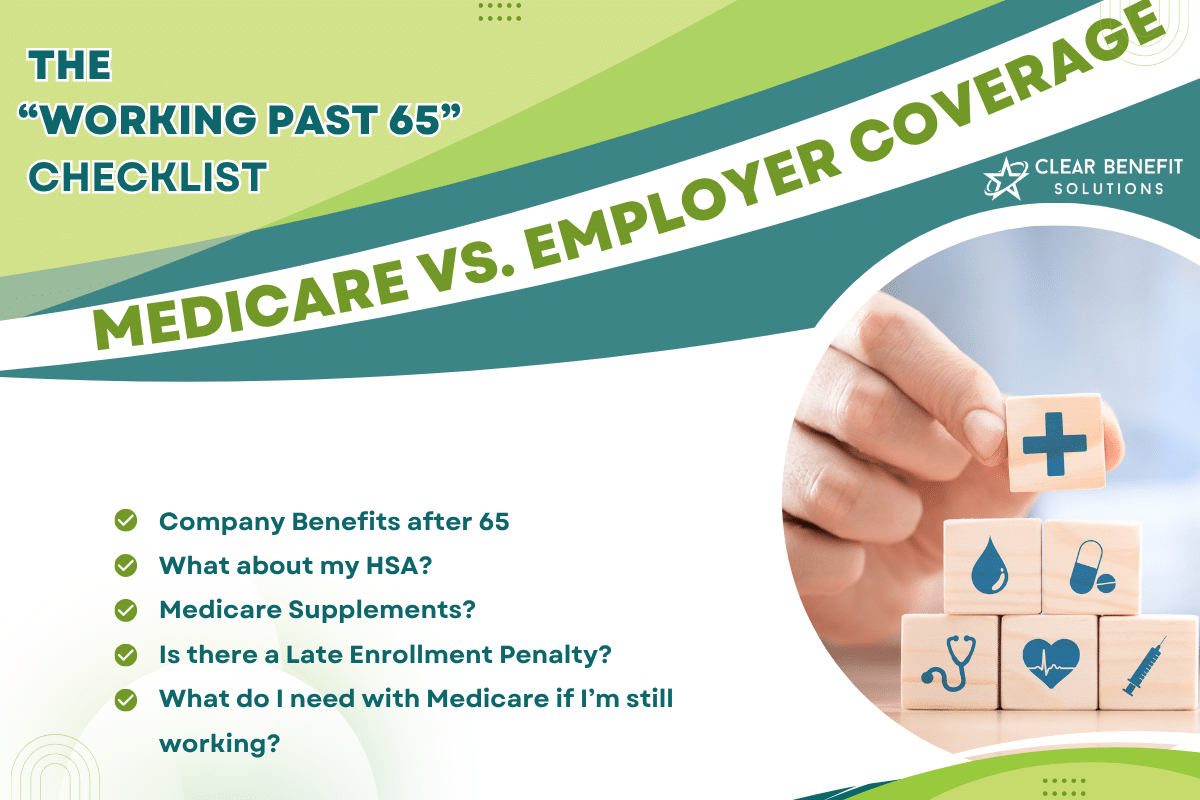
The answer isn’t a simple “yes” or “no”—it’s a “maybe, but let’s look at the math.” If you’re approaching 65 and plan to keep your desk (or your toolbox), use this 2026 checklist to avoid penalties and ensure you aren’t overpaying for coverage.
The “Rule of 20” (Employer Size Matters)
This is the most critical step. The size of your company determines who pays your medical bills first.
- 20 or More Employees: Your employer coverage is “Primary.” You can usually delay Medicare Part B without penalty.
- Fewer than 20 Employees: Medicare is “Primary.” Warning: If you don’t sign up for Medicare, your employer insurance might refuse to pay their portion of your bills, leaving you with a massive balance.
- Action Item: Ask your HR department specifically: “Is my group health plan ‘primary’ or ‘secondary’ to Medicare?”
Check for “Creditable” Drug Coverage
Under the new 2026 Medicare rules, the Part D (prescription drug) landscape has changed significantly, including the $2,100 out-of-pocket cap.
- Your employer must send you a “Notice of Creditable Coverage” every year.
- If your employer’s drug plan isn’t “as good as” Medicare, you must enroll in a Part D plan at 65 to avoid a late enrollment penalty that sticks with you for life.
The HSA Trap (Health Savings Accounts)
If you love your HSA, be careful.
- Once you enroll in any part of Medicare (even just the premium-free Part A), you can no longer contribute tax-free money to your HSA.
- Pro-Tip: If you want to keep contributing to your HSA, you must delay both Part A and Part B. However, you can still spend the money already in your HSA on Medicare premiums and co-pays.
Run the “Bottom Line” Comparison
Many seniors stay on employer plans out of habit, but in 2026, Medicare Advantage or a Medigap plan might actually be cheaper.
| Feature | Employer Plan | Medicare + Supplement/Advantage |
| Monthly Premium | Often high (split with employer) | Part B ($202.90*) + Plan Premium |
| Deductibles | Can be $3,000–$6,000+ | Often $0 or very low |
| Network | Limited to company choice | Wide (especially with Medigap) |
| Extras | Standard dental/vision | Often includes “Flex Cards” & Wellness |
Note: The 2026 standard Part B premium is estimated at $202.90, but high earners may pay more due to IRMAA (Income Related Monthly Adjustment Amount).
The 8-Month Safety Net
If you decide to keep working and delay Medicare, remember the 8-Month Special Enrollment Period (SEP). This window starts the month after your employment ends or your group coverage stops—whichever happens first.
- Crucial Warning: COBRA and Retiree coverage do not count as active employment. If you transition to COBRA at 66 and don’t sign up for Part B, you are likely accruing a lifetime late penalty.
Your “Working Past 65” Quick-Action Checklist
Before you blow out the candles on your 65th birthday, run through these four essential checks to ensure your coverage is secure.
- The “20-Employee” Test If you are unsure, ask HR if your company has 20 or more employees. If the answer is no, you generally must sign up for Medicare Part B to avoid being “uninsured” for the 80% that Medicare usually covers.
- Hunt for the “Creditable Coverage” Letter Check your files (or your inbox) for a notice from your employer regarding your prescription drug plan. If it isn’t “creditable,” you need to pick up a Part D plan to avoid lifetime late penalties.
- The 6-Month HSA Rule If you contribute to a Health Savings Account, plan your exit strategy. You must stop contributions 6 months before your Medicare Part A start date to avoid IRS tax headaches.
- Perform a “Premium Audit” Is your employer plan costing you more than $202.90/month? If so, you might get better coverage for less money by switching to Medicare + a Supplement or Advantage plan.
Timing is everything: If you decide to stay on your employer plan, mark your calendar for when you eventually retire. You only have an 8-month window to sign up for Part B without a penalty once that workplace coverage ends!
Still unsure which path is cheaper for your specific situation?
Choosing between a work plan and Medicare is a math problem, not a guessing game. Reach out today with our contact form or by calling us at (616) 320-8181 for a side-by-side comparison of your current workplace benefits versus the 2026 Medicare options.